 PHARAOH.SE
The Ramesseum is the large memorial temple of Ramesses II at Thebes in Upper Egypt.
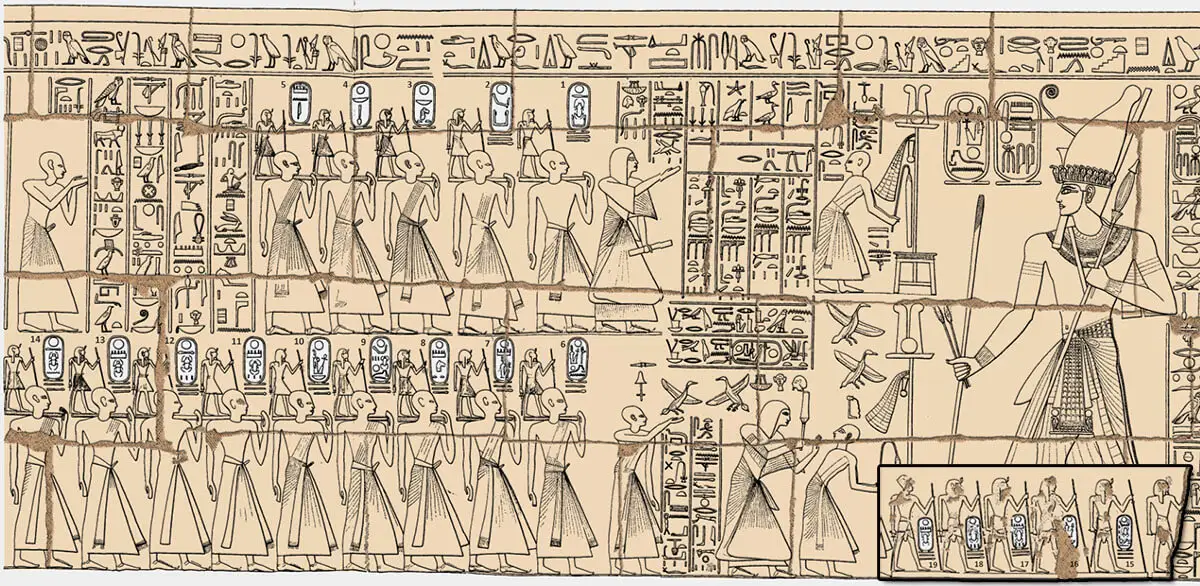
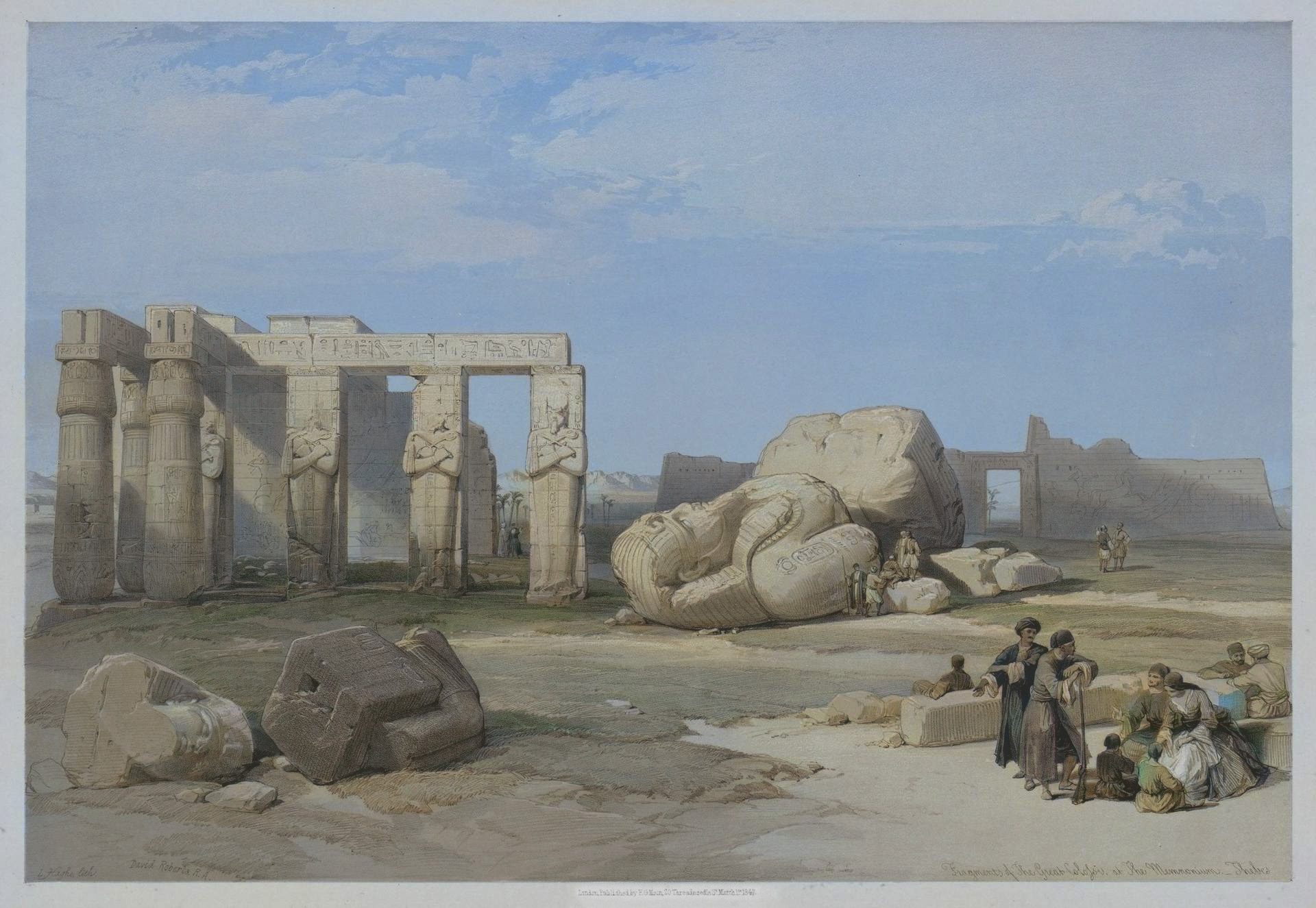
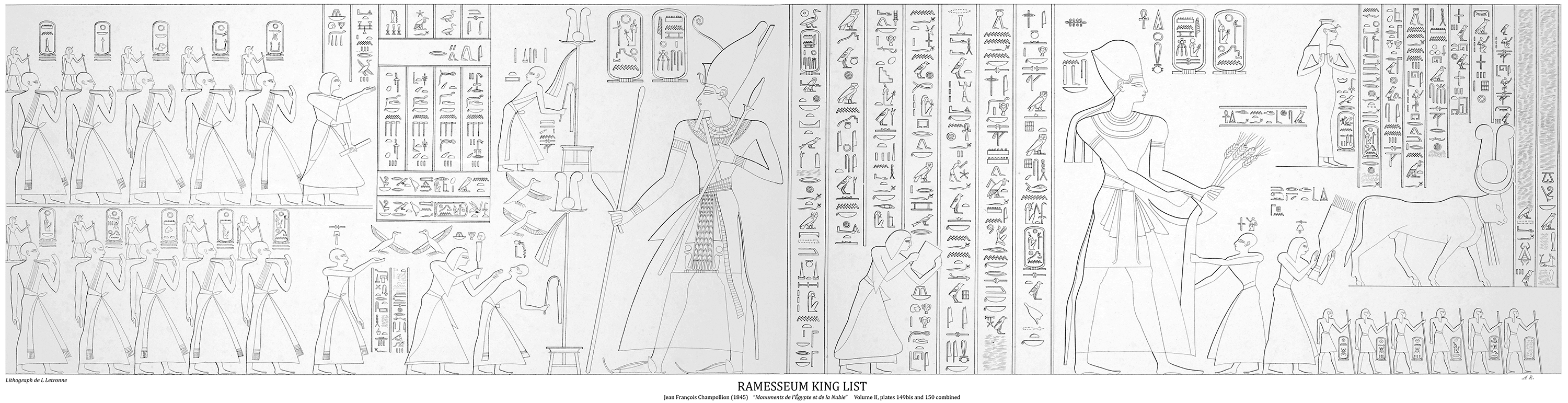
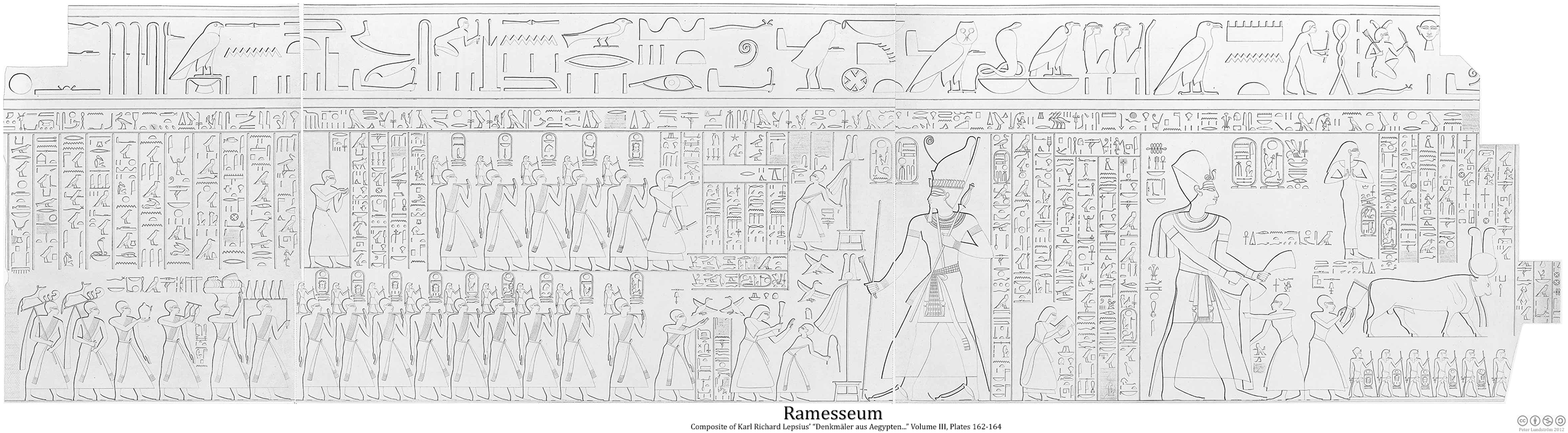
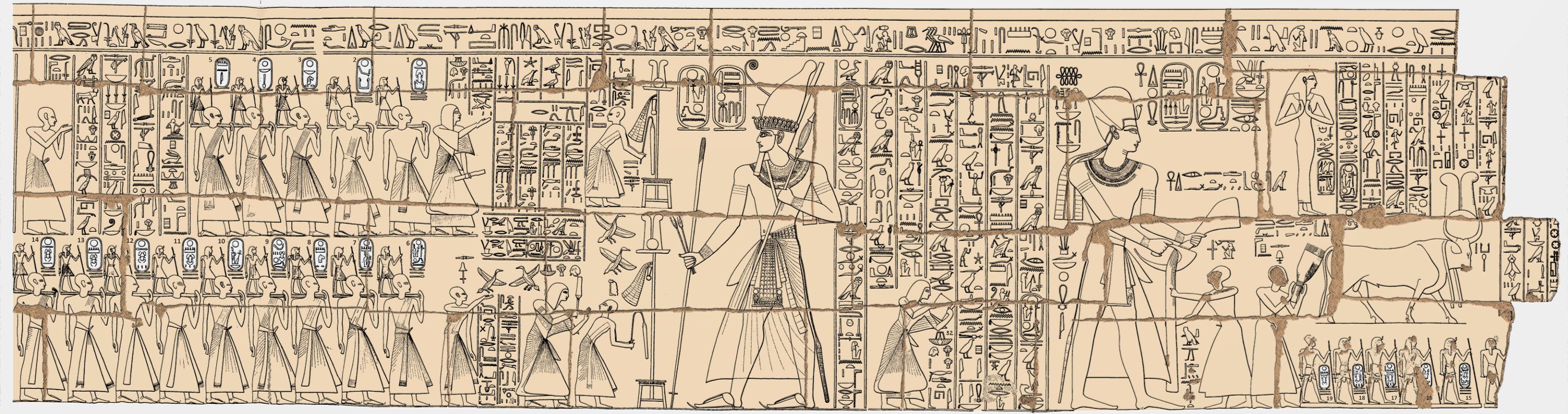
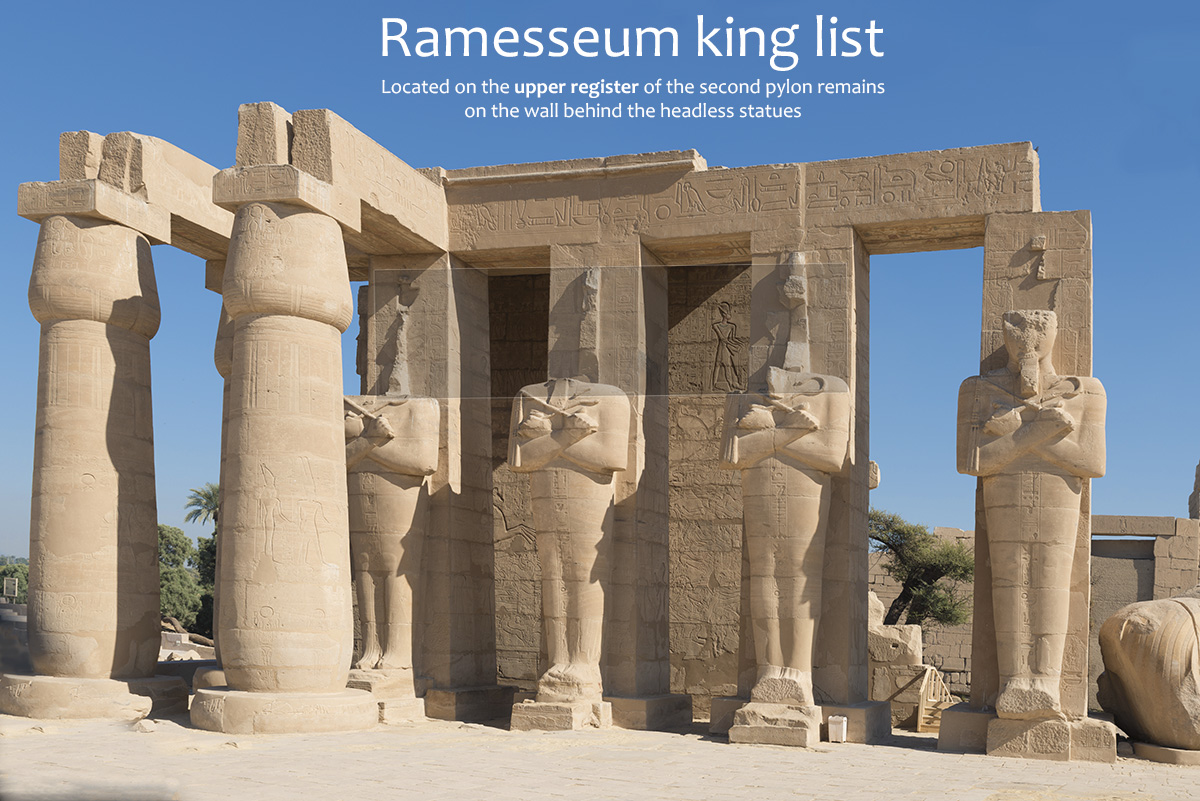
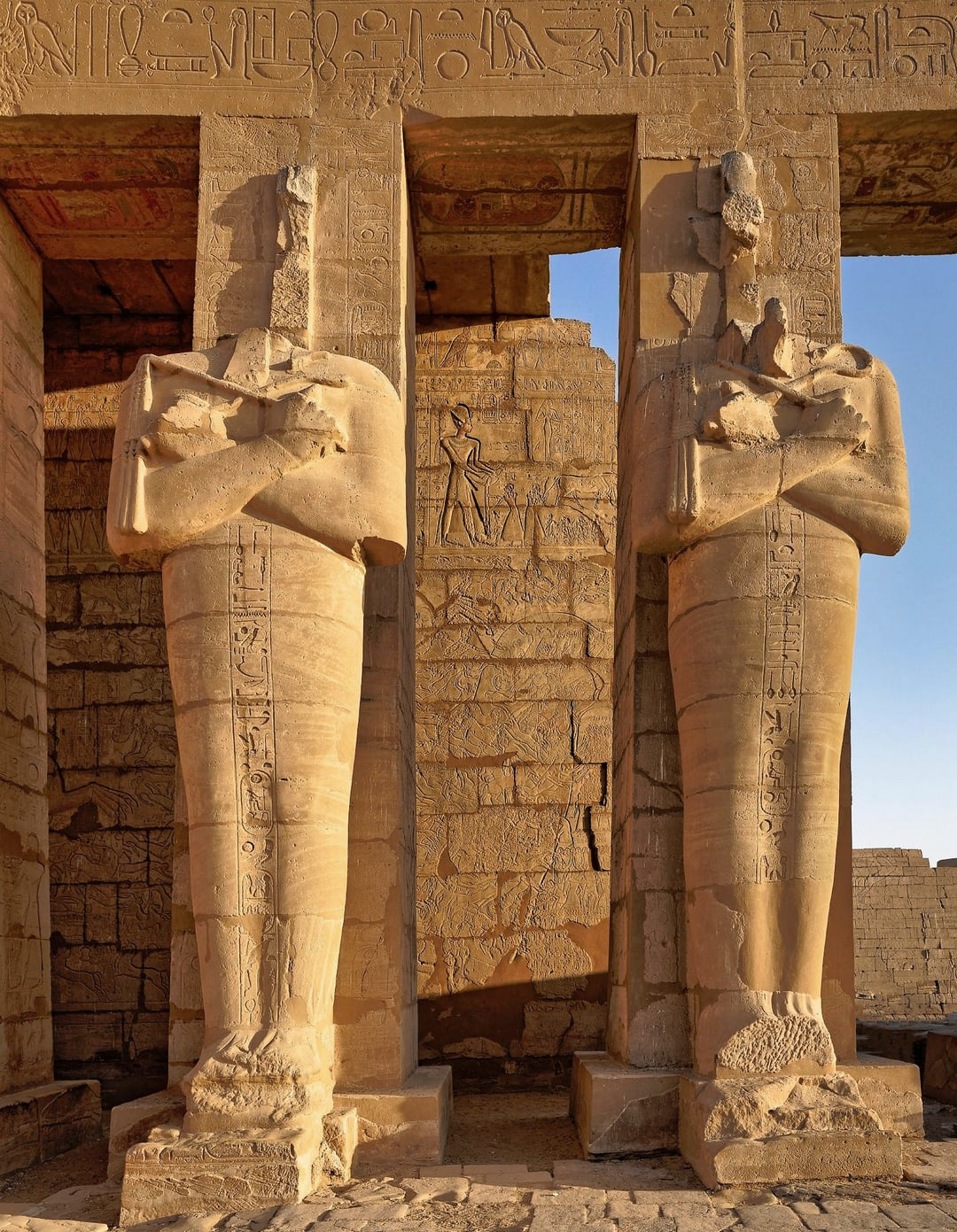
The ravages of time have not been kind to the Ramesseum, and only ruins of a small portion of the original structures survive today. Over the millennia its masonry was slowly being depleted and reused for other buildings, damaged by flooding, and finally neglected. Still surviving, the upper register of the second western pylon shows a processions where ancestors of Ramesses II are honored at ceremonies of the festival of Min. It contains two processions with ancestors being honored, containing 19 cartouches with the names of 14 pharaohs. Notably, Hatshepsut and the Amarna pharaohs are omitted.
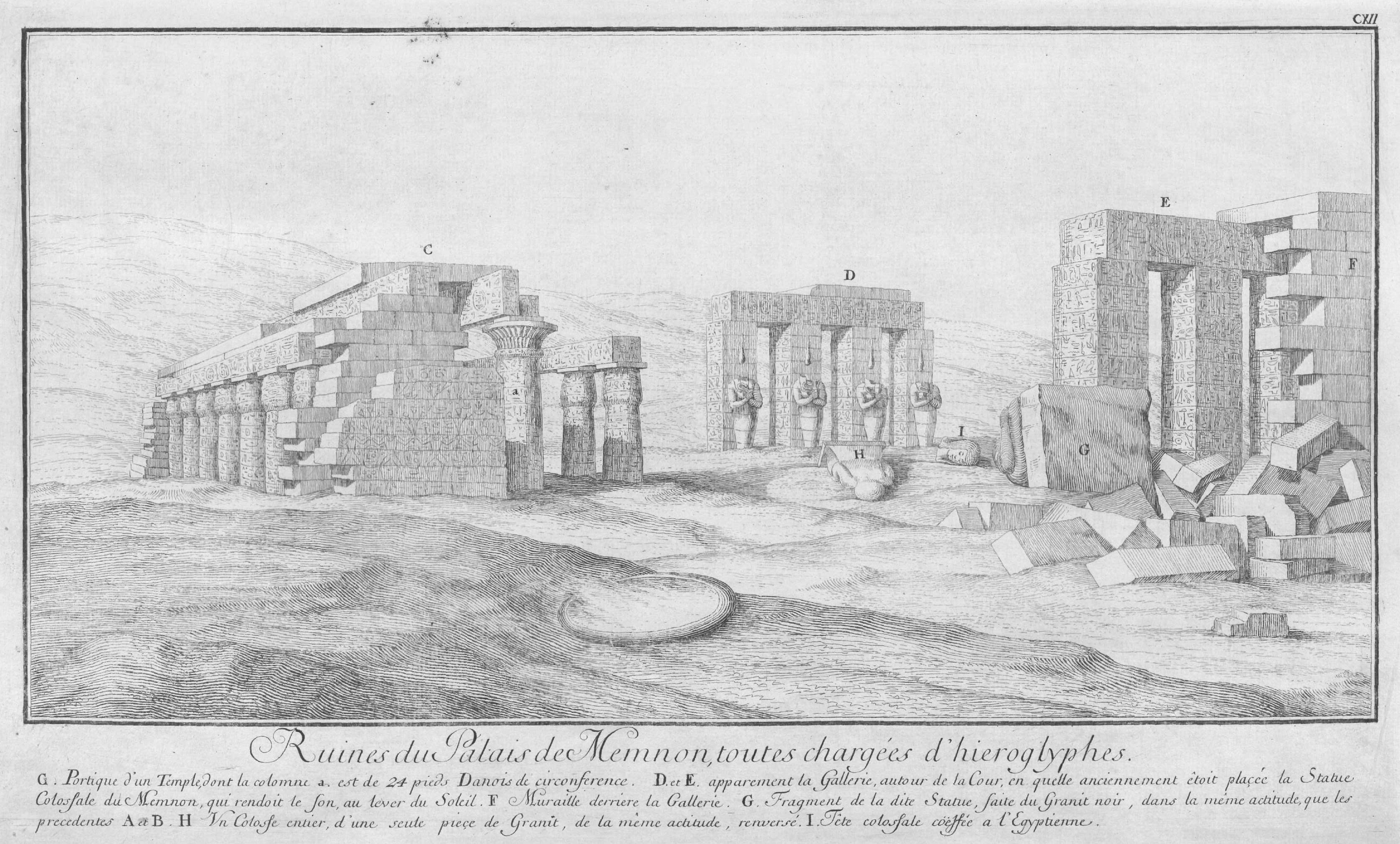
When rediscovered, it was eventually confirmed to be the vast monument of Ozymandyas described in antiquity by Diodorus and Strabo, who called it Memnonium. The name Ramesseum was first coined by Champollion, who visited the ruins in 1829, but Memnonium continued to be used by travellers until the 1850’s. The scene was first published by Champollion, followed by Lepsius some years later.