 PHARAOH.SE
The three impressive and colossal pyramids at Giza are a testament to the enduring presence of ancient Egypt like no other. They have existed for 5 000 years and continue to fascinate.
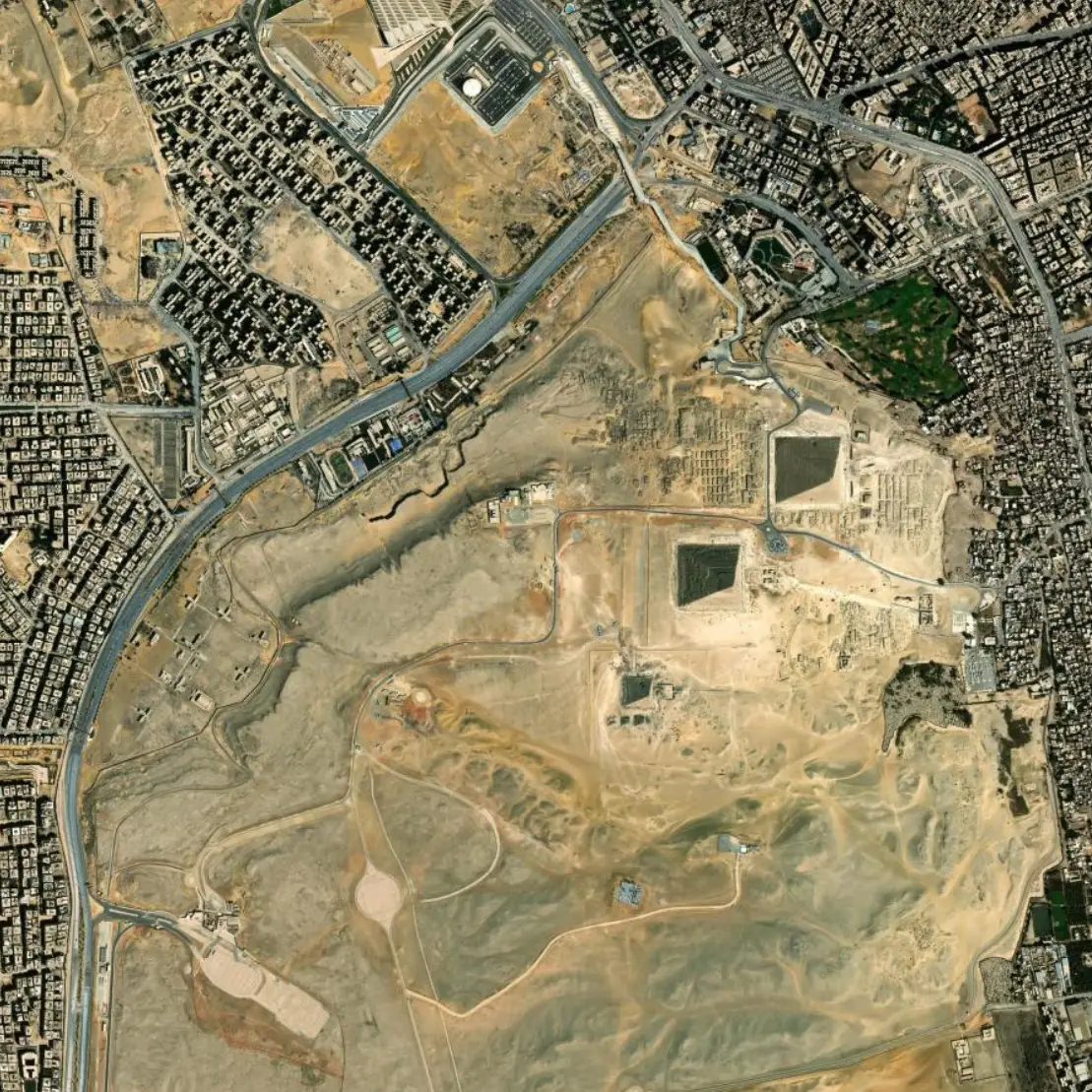
There are approximately 120-140 pyramids in Egypt, or rather, that is the number of pyramids built by the ancient Egyptians throughout their history. Many of these are now just piles of rubble, due to erosion or because the materials were quarried by subsequent pharaohs for other building projects. The quality of each pyramid also varied greatly, from poorly made mud bricks to perfectly cut granite blocks.
The most famous pyramids are the three at Giza: the Great Pyramid of Khufu, the Pyramid of Khafra, and the Pyramid of Menkaura. A large number of other pyramids can be seen a little further south of Giza, at Saqqara and Dahshur. They vary in size and shape. Some are very small, while others are massive structures that can be seen for miles around.
Sadly, modern Egypt did not realise that the uniqueness of the Giza plateau was being seriously eroded by Cairo's basically uncontrolled growth. It has swallowed up the Giza plateau, and has continued to engulf it more and more each year. What was once far out in the desert is now within the city. The "infinity" of the desert is today punctuated by smog, satellite dishes, and vast areas of high-rises. A quiet but probably deadly threat is the rise in groundwater caused by the massive sewage and water needs of the surrounding city. This moisture will eventually start to seep into the limestone of the Sphinx and the pyramids, causing the stone to flake and erode from the inside out. It is the lack of humidity in the desert that has helped preserve the monuments for several millennia. There is even a golf course within a stone's throw of the pyramids!
The name used by the ancient Egyptians is  of a pyramid.
The signs used to write the word are  (mr-m:r-mr).