 PHARAOH.SE
The division of pharaohs into dynasties is generally considered to be an invention by the Egyptian priest Manetho. Whenever some discontinuity occurred, a new dynasty was assumed.
In modern times, periods of political unrest or instability in ancient Egyptian history are referred to as ‘intermediate periods’, whereas stable times are regarded as ‘kingdoms’. The division of pharaohs into dynasties is generally considered to be an invention by the Egyptian priest Manetho. Whenever some discontinuity whether geographical, or genealogical ocurred, a new dynasty was assumed. Manetho’s history of Egypt is the most comprehensive, but is only known by references to it made by subsequent writers.
All ancient Egyptian king lists have significant gaps in the text or are incomplete. Some dynasties were in power at the same time, with multiple kings ruling concurrently, which makes chronological analysis difficult as the records are incredibly rare. Determining the exact reign of each pharaoh over the three thousand years that the Kingdom lasted is not an easy task. While the archaeological record is helpful, chronological gaps, deliberate omissions and conflicting information make it almost impossible to determine the actual duration and order of reigns.
Most of what we know about ancient history has been pieced together from snippets of information. Imagine finding a single, unnumbered page torn from a book. It doesn't tell you which book it's from, where in the book it belongs, or how many pages the book had. Historians must deduce where it fits in the sequence from other corroborating evidence, where available. Determining the chronological order of the dynasties is no simple task. There are three general approaches to date the history of ancient Egypt.
- High Chronology
- The traditional dates are the initial chronological framework historians developed in trying to date the dynasties and pharaohs.
- Low Chronology
- A shorter timeline where events are placed closer to the present day, mainly due to new discoveries and evidence.
- Middle Chronology
- This is a middle ground between the high and low chronologies, offering a compromise for dating events.
Already in the ancient world, Egypt was seen as a mysterious land, renowned for its massive monuments, stylized art, and the distinct Gods with animal heads. The mystical Egyptian religion taught that life on Earth was only one aspect of an eternal journey; the immortal soul was only temporarily inhabiting a body on this physical plane. After death, one would face judgment by Osiris in the Hall of Judgement, where the whole life of a person is judged by the scales of justice. The earthly remains of the deceased were deliberately mummified according to a strict regiment to prepare the deceased body for afterlife. Royalty and nobility also had large tombs created for remains, with elaborate spells written on the walls, to help with the journey.
The art style of Ancient Egypt is very distinctive, always depicting humans in profile, except for the torso, which is seen from the front. This art was almost always accompanied by small symbols of animals, plants, and so on, which are actually a highly formalized script and language known as hieroglyphs. The details of the text on the monuments were finally revealed when the hieroglyphs were deciphered in the early 17th century. Documents written on papyrus reveal information of daily life as well as mysteries about the afterlife in ancient Egyptian religion, such as the Book of the Dead.
Since ancient times, Egypt has been divided into the fertile Nile Delta in the north and the Nile Valley in the south. The northern delta, or Lower Egypt, is flat and fertile, with black soil deposited by the Nile's annual flooding. The delta's numerous waterways made it ideal for agriculture and trade, helping to create a unified economy. In contrast, Upper Egypt is more mountainous and much drier.
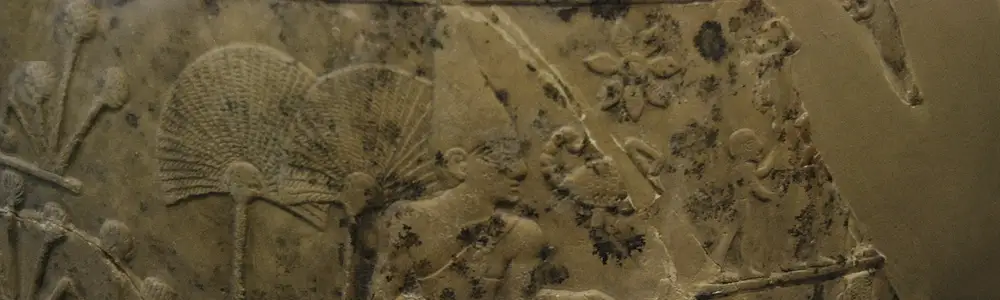
For a long time, scattered villages ruled their immediate surroundings and provided protection against intruders, but they were constantly at odds with each other. This changed around 3000 BC, when the southern king Narmer established himself as the undisputed ruler of the south by conquering the smaller territories. Having amassed a large army, he then conquered the north, uniting the two regions to form one kingdom and establishing a centralised administration. This did not happen overnight, but over the next century, peace and stability brought prosperity on an unprecedented scale and turned villages into cities. People all over the land began to identify as one people, united under one king and enjoying the stability. The unification of the Two Lands was celebrated as a single event, and it is reasonable to question whether one king actually united the kingdom, how this was achieved, and how long the process took. Although the mythical Menes is said to have unified Egypt, attempts to equate him with a specific king are problematic due to a lack of contemporary evidence.

Predynastic Period
| Dynasty | Reign | High (BC) | Low (BC) | Middle (BC) |
|---|---|---|---|---|
| Predynastic Kings | ? | ? | ? |
Early Dynastic Period
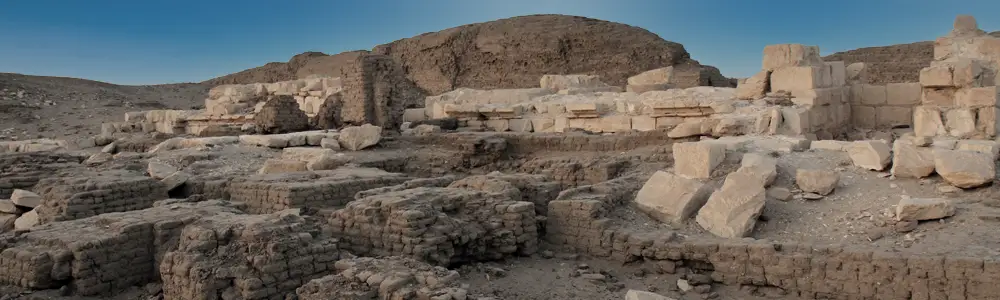
The Archaic Period of Ancient Egypt is generally considered to span from about 3100 BC to 2686 BC, and saw the development and refinement of agriculture, metallurgy, and writing. The first hieroglyphs appeared during this time, and the first cities began to emerge in the Nile valley. Local rulers gradually consolidated power by building up their military, expanding their territory, ultimately creating a centralised state. One of the most important developments was the unification of Egypt under a single ruler.
The unification of Egypt, which is traditionally dated to 3100 BC, marked the beginning of the Early Dynastic Period and the start of the ancient Egyptian civilization. It is generally taken to include the First and Second Dynasties, lasting from the Protodynastic Period of Egypt until about 2686 BC, or the beginning of the Old Kingdom.
| Dynasty | Reign | High (BC) | Low (BC) | Middle (BC) |
|---|---|---|---|---|
| First Dynasty | 8 kings (250 years) | 3000–2800 | 3150–2920 | 3100–2890 |
| Second Dynasty | 11 kings (204 years) | 2730–2590 | 2920–2700 | 2890–2686 |
Old Kingdom
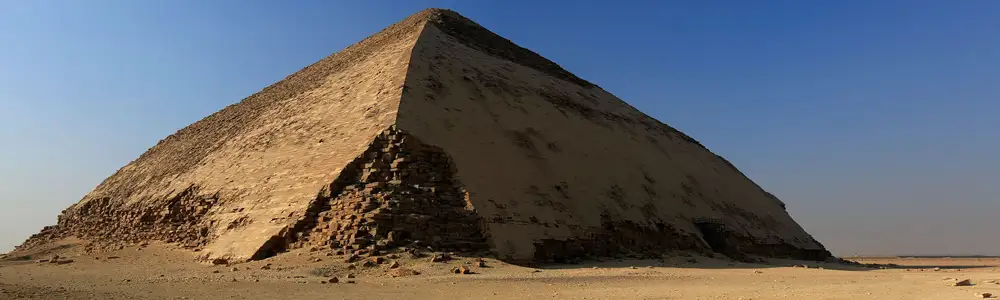
The Old Kingdom marks a shift from small and simple monuments, to monumental large-scale building projects, like the pyramids. The period is often referred to as the Age of the Pyramids, during which Egypt attained its first continuous period of internal security and prosperity.
Artists, architects and masons mastered techniques necessary to build monumental structures in stone, wood, and copper. They perfected the art of carving reliefs and painting the walls of temples and tombs.
| Dynasty | Reign | High (BC) | Low (BC) | Middle (BC) |
|---|---|---|---|---|
| Third Dynasty | 8 kings (73 years) | 2590–2540 | 2700–2630 | 2686–2613 |
| Fourth Dynasty | 9 kings (112 years) | 2540–2450 | 2630–2510 | 2613–2494 |
| Fifth Dynasty | 9 kings (149 years) | 2450–2300 | 2510–2370 | 2494–2345 |
| Sixth Dynasty | 6 kings (164 years) | 2300–2160 | 2370–2190 | 2345–2181 |
First Intermediate Period
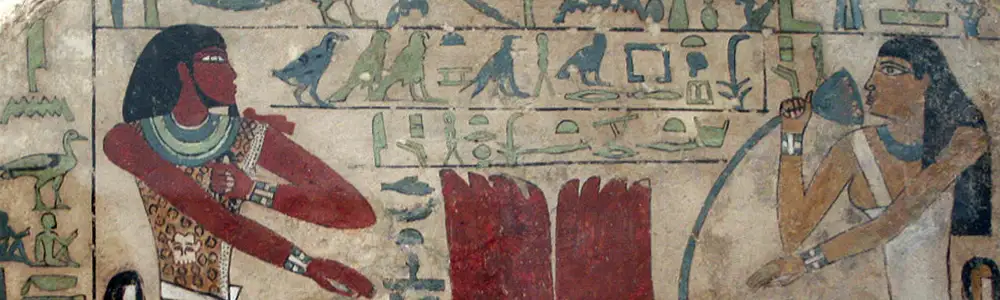
When Pepi II died, the centralised kingdom collapsed into what is called the First Intermediate Period. Pepi’s long reign had weakened the central authority and with his death, the kingdom began to to buckle.
As different factions fought for supremacy, from powerful noble families, to local nomarchs, the kingdom of the Two Lands collapsed, and was replaced by rulers that only controlled parts of the land. The temples were vandalized and pillaged as the political chaos grew.
| Dynasty | Reign | High (BC) | Low (BC) | Middle (BC) |
|---|---|---|---|---|
| Seventh Dynasty | Existence is doubtful | ? | ? | ? |
| Eighth Dynasty | 17 kings (21 years) | 2160–2140 | 2190–2165 | 2181–2160 |
| Ninth Dynasty | 5 kings (30 years) | 2140–2000 | 2165–2040 | 2160–2025 |
| Tenth Dynasty | 10 kings (91 years) | 2140–2000 | 2165–2040 | 2160–2025 |
| Eleventh Dynasty | 4 kings (70 years) | 2060–2000 | 2130–2060 | 2125–2060 |
Middle Kingdom
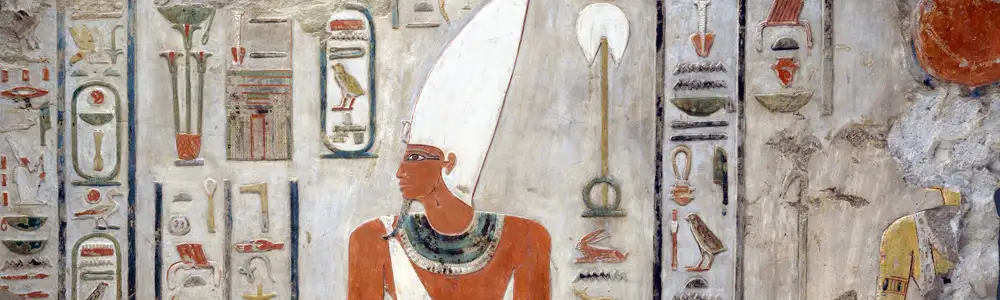
The Two Lands were once again united when Mentuhotep II defeated the tenth dynasty of Heracleopolis. The Middle Kingdom expanded trade outside the kingdom and consolidated pharaonic power by building defensive fortifications and kept a standing army ready for action.
The long reign of Amenemhat III most likely weakened pharaonic power once again, as local rulers became powerful. This led to a series of weak and ephemeral rulers that ended the golden age of the Middle Kingdom.
| Dynasty | Reign | High (BC) | Low (BC) | Middle (BC) |
|---|---|---|---|---|
| Eleventh Dynasty | 3 kings (69 years) | 2000–1950 | 2060–2000 | 2060–1985 |
| Twelfth Dynasty | 8 kings (189 years) | 1950–1750 | 2000–1780 | 1985–1773 |
Second Intermediate Period
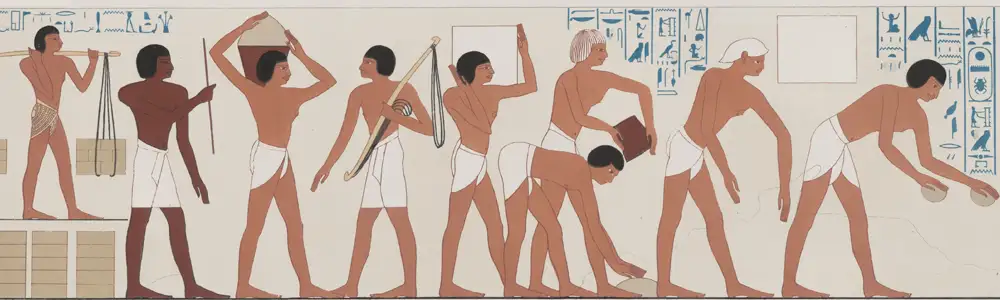
The Second Intermediate Period was a period of disarray. It is best known as when the Hyksos, whose reign comprised the Fifteenth and Sixteenth Dynasties, made their appearance in Egypt. Around the time Memphis fell to the Hyksos, the native Egyptian ruling house in Thebes declared its independence and set itself up as the Seventeenth Dynasty. This dynasty eventually drove the Hyksos back into Asia.
| Dynasty | Reign | High (BC) | Low (BC) | Middle (BC) |
|---|---|---|---|---|
| Thirteenth Dynasty | 50+ kings (154 years) | 1750–1630 | 1780–1655 | 1773–1650 |
| Fourteenth Dynasty | 50+ kings (75 years) | 1700–1630 | 1730–1655 | 1725–1650 |
| Fifteenth Dynasty | 10 Hyksos kings (50 years) | 1630–1530 | 1655–1555 | 1650–1550 |
| Sixteenth Dynasty | 20 kings (67 years) | 1630–1550 | 1655–1585 | 1650–1580 |
| Abydos Dynasty | 16 kings (50 years) | 1630–1550 | 1655–1585 | 1650–1580 |
| Seventeenth Dynasty | 9 kings (30 years) | 1630–1550 | 1655–1585 | 1650–1580 |
New Kingdom
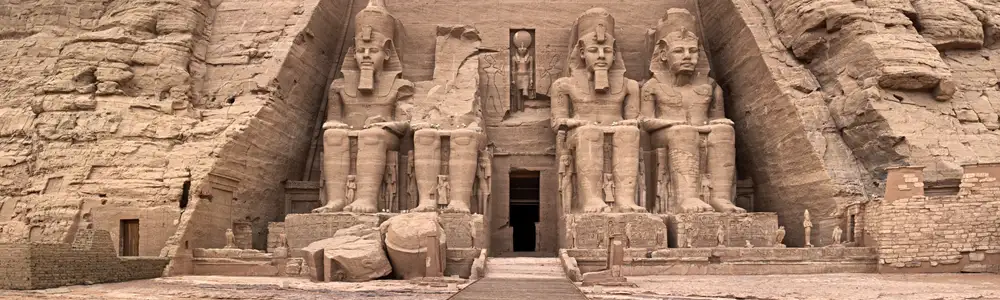
Through military dominance abroad, The New Kingdom saw Egypt's greatest territorial extent. It expanded far into Nubia in the south, and held wide territories in the Near East. The Egyptians fought with Hittites. Two of the best known pharaohs of the New Kingdom are Akhenaten, whose exclusive worship of the Aten is often interpreted as the first instance of monotheism, and Ramesses II, who attempted to recover the territories that had been held in the Eighteenth Dynasty.
| Dynasty | Reign | High (BC) | Low (BC) | Middle (BC) |
|---|---|---|---|---|
| Eighteenth Dynasty | 15 kings (258 years) | 1530–1270 | 1555–1300 | 1550–1292 |
| Nineteenth Dynasty | 8 kings (103 years) | 1270–1170 | 1300–1195 | 1292–1189 |
| Twentieth Dynasty | 10 kings (112 years) | 1170–1060 | 1195–1080 | 1189–1077 |
Third Intermediate Period
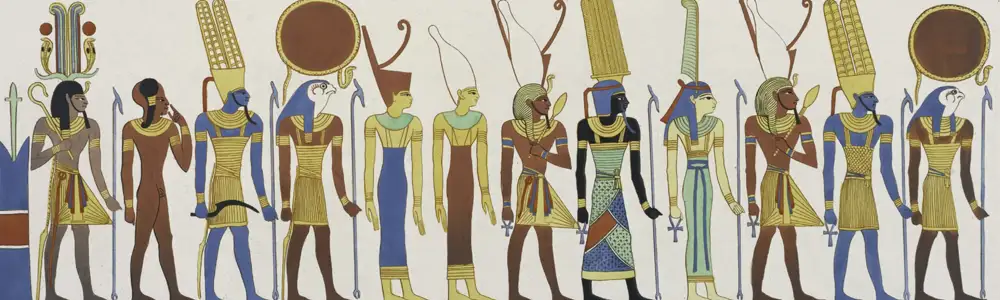
This Period was marked by decline and political instability, dividing the state for much of its duration. Most rulers were of Libyan descent. At the end of the period, the Nubian Kingdom conquered Egypt, but adopted the Egyptian customs and traditions.
| Dynasty | Reign | High (BC) | Low (BC) | Middle (BC) |
|---|---|---|---|---|
| Twenty-first Dynasty | 7 kings (126 years) | 1060–930 | 1080–950 | 1077–943 |
| Twenty-second Dynasty | 12 kings (223 years) | 930–710 | 950–730 | 943–720 |
| Twenty-third Dynasty | 7 kings (109 years) | 820–710 | 840–725 | 837–720 |
| Twenty-fourth Dynasty | 2 kings (12 years) | 720–710 | 735–720 | 732–720 |
| Twenty-fifth Dynasty | 5 Nubian kings (88 years) | 730–650 | 750–660 | 744–656 |
Late Period
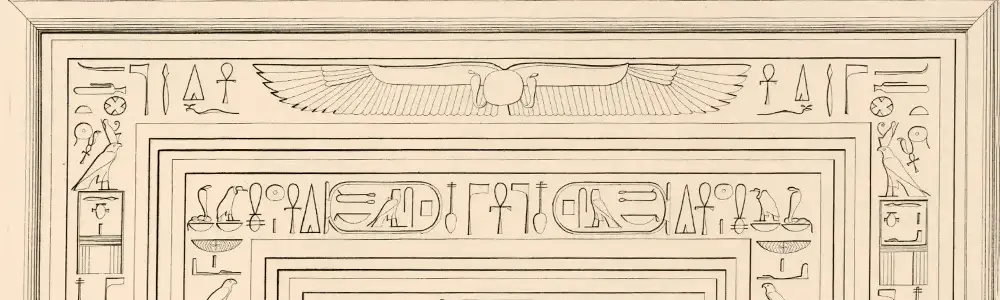
The Late Period refers to the last flowering of native Egyptian rulers, into Persian conquests.
| Dynasty | Reign | High (BC) | Low (BC) | Middle (BC) |
|---|---|---|---|---|
| Twenty-sixth Dynasty | 7 kings (139 years) | 660–520 | 670–530 | 664–525 |
| Twenty-seventh Dynasty | 6 Persian kings (121 years) | 520–400 | 530–405 | 525–404 |
| Twenty-eighth Dynasty | 1 king (6 years) | 404–399 | 404–399 | 404–399 |
| Twenty-ninth Dynasty | 5 kings (18 years) | 398–380 | 399–380 | 398–380 |
| Thirtieth Dynasty | 3 kings (37 years) | 380–343 | 380–343 | 380–343 |
| Thirty-first Dynasty | 3 Persian kings (11 years) | 340–332 | 345–332 | 343–332 |
Hellenistic Period
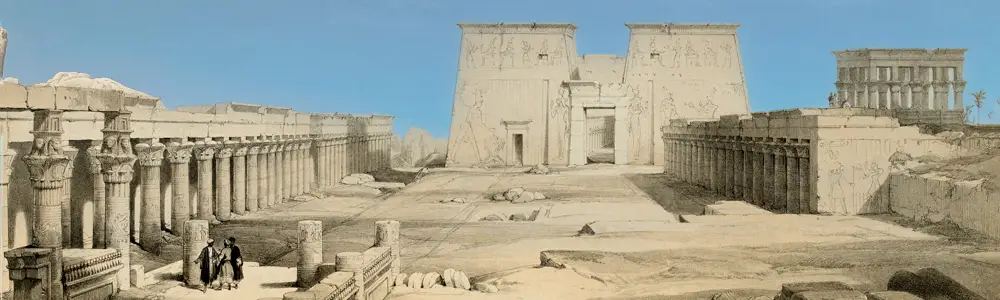
The Hellenistic Period most often included in the Late Period, and were the last dynasties (despite the fact that they were conquering Macedonian Greeks,) that continued the rule of Egypt with a pharaoh on the throne.
| Dynasty | Reign | High (BC) | Low (BC) | Middle (BC) |
|---|---|---|---|---|
| Argead Dynasty | 3 kings (23 years) | 332–305 | 332–305 | 332–305 |
| Ptolemaic Dynasty | 16 kings (275 years) | 305–30 | 305–30 | 305–30 |
Roman Period
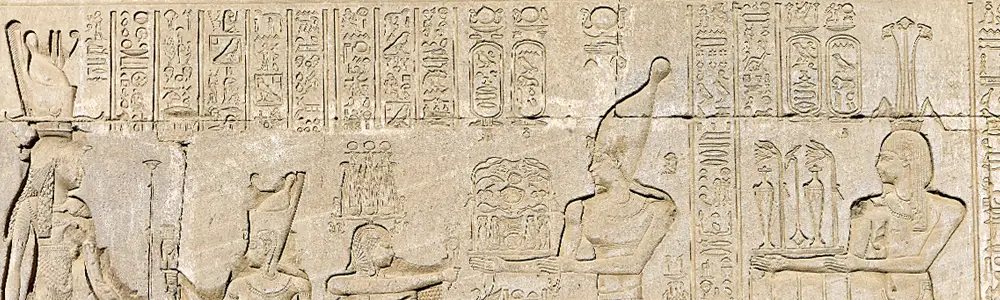
Finally, Egypt was made a Roman province, effectively ending the rule of the pharaohs. The use of hieroglyphs for the names of emperors continued sporadically, but was finally abandoned in the early 4th century. Egypt ceased to be part of the Roman Empire permanently in 641, when it became part of the Rashidun Caliphate.
| Dynasty | Reign | High (BC) | Low (BC) | Middle (BC) |
|---|---|---|---|---|
| Roman Pharaohs | 30 emperors (343 years) | 30 BC–313 AD | 30 BC–313 AD | 30 BC–313 AD |
Unplaced
Pharaohs whose existence is in doubt or whose evidence makes it difficult to assign them to a certain dynasty. They may not have ruled at all, or they may have merely had local authority in specific regions of the kingdom. Due to this ambiguity, they are referred to as Unplaced

| Dynasty | Reign | High (BC) | Low (BC) | Middle (BC) |
|---|---|---|---|---|
| Unplaced Pharaohs |